 |
Motor de Búsqueda de Datasheet de Componentes Electrónicos |
|
|
Motor de Búsqueda de Datasheet de Componentes Electrónicos |
|
The question interval is too short.
Please try again in a few seconds.

Hello, Please ask a question about ATS612LSG Datasheet
# Example questions:
➢ What is the maximum operating temperature for the sensor package material?
➢ What specific emc (electromagnetic compatibility) tests are mentioned in the document, and what reference specifications are used for these tests?
➢ How does the ats360 sensor mitigate the effects of air gap variations between the sensor and the target tooth, as described in the document?
| Part No. | ATS612LSG |
| Manufacturer | ALLEGRO |
| Size | 415 Kbytes |
| Pages | 15 pages |
| Description | DYNAMIC, SELF-CALIBRATING, PEAK-DETECTING, DIFFERENTIAL HALL-EFFECT GEAR-TOOTH SENSOR |


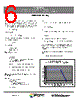







1. Core Function & Advantages:
️· Type: This is a gear-tooth sensing module. It's designed to detect the position and speed of rotating gears (or similar toothed objects).
️· Key Benefits/Features:
- High Sensitivity: The module is designed to be very sensitive to the presence of gear teeth, allowing for accurate detection even with small gaps or imperfections.
- Robustness: It has features to mitigate issues like noise and temperature changes, ensuring reliable operation.
- Flexibility: It can operate under a wide range of conditions (as evidenced by the temperature range and performance charts).
- EMC Performance: The device has been tested for electromagnetic compatibility, indicating its ability to operate in environments with electrical noise.
️· Unique Design: It features a metallic protrusion that’s electrically connected to the substrate and pin 4 (ground) – a design element intended for grounding purposes.
2. Technical Specifications & Performance:
️· Operating Principle: It uses a Hall-effect sensor to detect changes in magnetic fields caused by passing gear teeth.
️· Performance Metrics (from charts – see below for a more detailed breakdown):
- Air Gap Tolerance: The module can detect gear teeth with relatively large air gaps (up to several millimeters, depending on the speed and tooth type).
- Temperature Range: Designed to operate within a fairly wide temperature range (-40°C to 150°C, although there are considerations for peak temperatures).
- Speed Range: Suitable for a variety of gear speeds (as indicated by the "rising/falling sequential tooth edge" graphs).
️· Tooth type capable of reading both rising and falling tooth edges.
3. Performance Chart Details (Important for Understanding Capability):
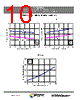
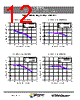
️· Rising/Falling Tooth Edge Graphs: These charts (present for 1000 RPM and 10 RPM) show the output signal amplitude as a function of the air gap distance. They illustrate:
- Sensitivity: How close the gear needs to be for the sensor to reliably detect it.
- Signal Strength: The amplitude of the output signal.
- Temperature Impact: The effect of temperature on the signal's strength. (Graphs are shown at -40°C, 150°C, and 25°C).
️· Rising/Falling Sequential Tooth Edge Graphs: These charts show the signal response for consecutive tooth detections.
4. Physical & Environmental:
️· Package Material: Thermoset epoxy (max. temp. 170°C)
️· Lead Coating: Tin / Lead 90/10 (Industry standard soldering techniques)
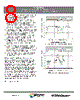
️· EMC Tests: The document lists a range of EMC tests performed (ESD, Conducted Transients, etc.) according to industry standards (AEC-Q100, ISO standards).
5. Important Notes/Cautions:
️· Temperature Limits: While the operating range is -40°C to 150°C, there are peak temperature limits to be mindful of.
️· Soldering: Specific soldering techniques are required to avoid damaging the component.
️· Critical Applications: The device is *not* approved for life-support applications without express written consent from Allegro MicroSystems.
️· Patent Information: The document lists a significant number of patents related to the technology.
1. Core Function & Advantages:
️· Type: This is a gear-tooth sensing module. It's designed to detect the position and speed of rotating gears (or similar toothed objects).
️· Key Benefits/Features:
- High Sensitivity: The module is designed to be very sensitive to the presence of gear teeth, allowing for accurate detection even with small gaps or imperfections.
- Robustness: It has features to mitigate issues like noise and temperature changes, ensuring reliable operation.
- Flexibility: It can operate under a wide range of conditions (as evidenced by the temperature range and performance charts).
- EMC Performance: The device has been tested for electromagnetic compatibility, indicating its ability to operate in environments with electrical noise.
️· Unique Design: It features a metallic protrusion that’s electrically connected to the substrate and pin 4 (ground) – a design element intended for grounding purposes.
2. Technical Specifications & Performance:
️· Operating Principle: It uses a Hall-effect sensor to detect changes in magnetic fields caused by passing gear teeth.
️· Performance Metrics (from charts – see below for a more detailed breakdown):
- Air Gap Tolerance: The module can detect gear teeth with relatively large air gaps (up to several millimeters, depending on the speed and tooth type).
- Temperature Range: Designed to operate within a fairly wide temperature range (-40°C to 150°C, although there are considerations for peak temperatures).
- Speed Range: Suitable for a variety of gear speeds (as indicated by the "rising/falling sequential tooth edge" graphs).
️· Tooth type capable of reading both rising and falling tooth edges.
3. Performance Chart Details (Important for Understanding Capability):
️· Rising/Falling Tooth Edge Graphs: These charts (present for 1000 RPM and 10 RPM) show the output signal amplitude as a function of the air gap distance. They illustrate:
- Sensitivity: How close the gear needs to be for the sensor to reliably detect it.
- Signal Strength: The amplitude of the output signal.
- Temperature Impact: The effect of temperature on the signal's strength. (Graphs are shown at -40°C, 150°C, and 25°C).
️· Rising/Falling Sequential Tooth Edge Graphs: These charts show the signal response for consecutive tooth detections.
4. Physical & Environmental:
️· Package Material: Thermoset epoxy (max. temp. 170°C)
️· Lead Coating: Tin / Lead 90/10 (Industry standard soldering techniques)
️· EMC Tests: The document lists a range of EMC tests performed (ESD, Conducted Transients, etc.) according to industry standards (AEC-Q100, ISO standards).
5. Important Notes/Cautions:
️· Temperature Limits: While the operating range is -40°C to 150°C, there are peak temperature limits to be mindful of.
️· Soldering: Specific soldering techniques are required to avoid damaging the component.
️· Critical Applications: The device is *not* approved for life-support applications without express written consent from Allegro MicroSystems.
️· Patent Information: The document lists a significant number of patents related to the technology.
| Part No. | ATS612LSG |
| Manufacturer | ALLEGRO |
| Size | 415 Kbytes |
| Pages | 15 pages |
| Description | DYNAMIC, SELF-CALIBRATING, PEAK-DETECTING, DIFFERENTIAL HALL-EFFECT GEAR-TOOTH SENSOR |
| ¿ALLDATASHEET es útil para Ud.? [ DONATE ] |
Todo acerca de Alldatasheet | Publicidad | Contáctenos | Política de Privacidad | Enlace a la hoja de datos | Intercambio de Enlaces | Lista de Fabricantes All Rights Reserved©Alldatasheet.com |
| Russian : Alldatasheetru.com | Korean : Alldatasheet.co.kr | Spanish : Alldatasheet.es | French : Alldatasheet.fr | Italian : Alldatasheetit.com Portuguese : Alldatasheetpt.com | Polish : Alldatasheet.pl | Vietnamese : Alldatasheet.vn Indian : Alldatasheet.in | Mexican : Alldatasheet.com.mx | British : Alldatasheet.co.uk | New Zealand : Alldatasheet.co.nz |
|
Family Site : ic2ic.com |
icmetro.com |
 Mexican ▼
  English
 Chinese
 German
 Japanese
 Russian
 Korean
 Spanish
 French
 Italian
 Portuguese
 Polish
 Vietnamese
 Indian
 British
 New Zealand